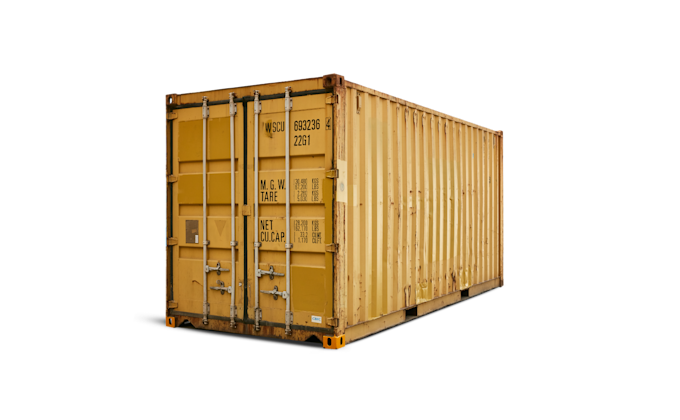
Belongings that no longer fit in your home or shed, but still need to stay dry and secure: a shipping container is a robust solution. Whether it is a set of winter tyres, garden furniture, stacked timber or years of business archives — a lockable, wind and watertight container keeps your possessions protected from the weather, moisture and unwanted visitors.
A steel shipping container is built to keep cargo dry across the open sea for years on end. Those same qualities make it ideal for storage on your own site. Popular uses include:
For businesses looking for structurally more storage, a container can also serve as a fully-fledged warehouse alongside the existing premises.
A used container from HEROX is guaranteed wind and watertight, so rain cannot get in. Even so, moisture can still form, and this is almost always condensation: temperature differences between day and night cause moisture in the air to settle on the cold steel. For vulnerable items such as furniture, wooden boards and archive paper, this is the main point of attention.
The solution is not even better waterproofing, but air circulation. With ventilation grilles that allow airflow from low to high, the air inside stays dry. For moisture-sensitive contents, insulation is a worthwhile addition. You can read more background in our article on preventing condensation in a shipping container.
Load only dry goods. Damp furniture, wet timber or clammy boxes bring extra moisture into the enclosed space and increase condensation. Place furniture on pallets or battens clear of the floor, and for sensitive contents use a desiccant such as container drying bags.
The double container doors are already substantial as standard. For archives or valuable household goods, HEROX fits a lock box in its own workshop: a steel cover that fully encloses the padlock, so intruders cannot get a tool onto it. That way your storage stands secure, even if the container is in a remote spot.
Good preparation prevents most problems. The steps below help you on your way to a dry, secure storage space.
Curious which containers are immediately available for your storage? View the current stock and starting prices in the shop.
The right size depends on what you are storing. For a set of tyres or some garden furniture, a compact 10ft container of around 3 metres is often enough. For the full contents of a home, stacked timber or a growing archive, a 20ft (around 6 metres) is the most chosen middle ground, while a 40ft (around 12 metres) offers maximum volume. If you are hesitating between two sizes, choose the larger one: extra space costs relatively little, whereas a container that is too small quickly becomes a squeeze.
Compare the sizes below, or read our comprehensive guide on which size of shipping container suits you.
Buitenmaten (l × b); High Cube-varianten zijn 30 cm hoger. View stock →
If it concerns a temporary need — storage during a renovation or hiring an archive container for a bridging period — then hiring is often the most flexible choice. For structural use, for example tyre or timber storage year in, year out, buying is usually more cost-effective because the container retains its value. At around a year of use, the calculation tips over for most situations. You can read more about this in buying or hiring: what suits your situation.
Not sure which size or condition best suits tyres, furniture, timber or archives? Leave your name and number for expert advice and a quote with price, stock and delivery date — on working days within an hour by email.
Yes. A container for furniture storage is wind and watertight as standard and keeps rain out. The point of attention is condensation: place furniture on pallets clear of the floor, provide ventilation grilles and load everything in dry. For sensitive household goods, insulation and a desiccant help to counter moisture further.
Condensation forms because the steel cools down at night and moisture from the air settles on it. Prevent this with ventilation grilles that let air flow from low to high. Store only dry timber and keep tyres or boards clear of the walls and floor, so air can circulate all around.
Yes, hiring is possible for temporary or bridging archive storage. You only pay for the period you use the container and can easily scale up or down. The monthly price depends on size, condition and term. For a concrete tailored hire proposal, HEROX takes your details and sends a proposal by email within an hour on working days.
The double container doors are already sturdy as standard. For extra peace of mind, HEROX fits a lock box in its own workshop: a steel cover that fully encloses the padlock, so no tool can be applied to it. This is especially recommended for archives or valuable household goods in a remote spot.
That depends on what you are keeping. For tyres or some garden furniture, a 10ft container of around 3 metres is often enough. For the full contents of a home, timber or a growing archive, a 20ft (around 6 metres) is the usual choice, while a 40ft offers maximum volume. If you are hesitating, choose the larger size: extra space costs relatively little.
View live stock with prices, or get a tailored quote within one business hour.