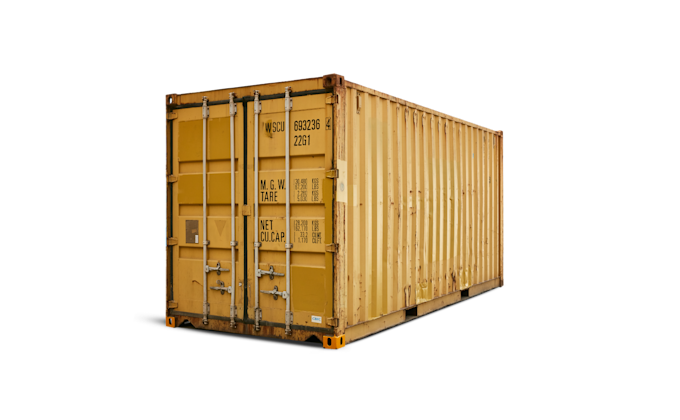
A shipping container as a garden house instantly provides sturdy, lockable space in the garden, without the build time of brickwork or a timber lean-to shed. Whether you're after dry storage or a comfortable garden room to work and relax in: the steel shell is there, and the rest is a matter of the right adaptations. In this article you'll read how to convert a container into a fully-fledged garden space and what to look out for.
A shipping container is by nature a guaranteed wind and watertight, break-in-resistant steel box, built to stand outdoors for years. That makes it a robust base for the garden: it's usually in place within 3 to 7 working days, needs barely any maintenance and, with normal use, lasts 25 to 30 years. For simple storage you can often use a used container virtually unchanged; if you really want to spend time inside, the finish determines how comfortable it becomes.
The base always remains the same steel shell. Anyone wanting more than storage opts for a conversion with insulation, light and a neat exterior. That way the same container grows from practical shed to fully-fledged garden room.
The difference between a shed and a garden room isn't in the container, but in what you have done to it. A shed gets by with ventilation grilles, some lighting and possibly an extra personnel door for easy access. A garden room or garden house to work, exercise or relax in calls for insulation of the walls, roof and floor, windows for daylight, a power connection and a smart interior and exterior finish.
An important choice to make upfront: do you have the conversion carried out entirely by the workshop, or do you do further work yourself on a bare shell? Both are possible, each with its own pros and cons.
You choose the size based on the available space and the intended use. A 10ft container of around 3 metres is compact and fits on a small yard or at the back of the garden, ideal as a shed for tools and garden supplies. A 20ft container of around 6 metres is the most popular middle ground and offers enough room for a proper garden room with a seating area or workspace. If you're hesitating between two sizes, go for the larger one: extra space costs relatively little, while a space that's too small soon becomes cramped. Compare the options below.
Buitenmaten (l × b); High Cube-varianten zijn 30 cm hoger. View stock →
Bare steel barely insulates and cools quickly at night, causing condensation. For a comfortable garden room, insulation is therefore the most important step: walls, roof and floor are insulated with, for example, spray PUR foam or insulation boards, always combined with sufficient ventilation against moisture. For daylight and fresh air, windows and a personnel door are added; the steel is cut to size, the edge reinforced and the opening neatly sealed, so the container stays just as wind and watertight as before.
The exterior completes the picture: HEROX sprays the container in its own workshop in any desired RAL colour, from a green shade that blends into the garden to a sleek modern colour. That way you end up with not an industrial shipping container, but a tidy garden space.
Tell us what use you have in mind and what size you think you'll need. On working days you'll receive a tailored proposal within an hour, with the possible modifications and delivery to your location.
A container only sits well when the surface is right. Ensure a flat, paved and load-bearing surface, for example concrete or heavy-duty paving slabs on a compacted sand bed, so the container stands level and firm and water doesn't pool around the base. Just as important is accessibility: the crane lorry or sideloader that places the container must be able to reach the spot with the lorry. Think of a clear access route, enough room to lift and no cables or branches in the way.
HEROX delivers across Europe and sets the container down exactly where you want it, provided the surface is reasonably flat and paved and the location is accessible for a lorry. Measure the access and the placement spot in advance, then delivery goes smoothly.
Whether you need a permit depends on the location on your plot, the size and how long the container stays. If the container is used for storage at the rear of the plot and stays within the usual dimensions for outbuildings, placement is permit-free in many areas. If you use the space as a dwelling, place it at the front of your plot or permanently, then a planning permit is more often required. Because the rules vary by area and situation, only your local authority can give you certainty.
Always check with your local authority before purchase which rules apply to your plot and use. That way you avoid having to move or adapt a newly converted garden room afterwards. HEROX makes no promises about permits, because the rules differ by local authority and country.
For most gardens, a 10ft or 20ft container is the logical choice: compact enough to fit neatly in the garden, spacious enough for storage or a comfortable garden room. You can take either a new or used container as a base. Take a look at the current options from the shop below.
Browse the range of new and used containers in the shop and request a quote straight away with your desired size and delivery location. That way you'll quickly know what a made-to-measure garden house, garden room or shed costs for you.
Yes. A shipping container is an excellent base for a garden room. For a comfortable living space, the walls, roof and floor are insulated and windows, a personnel door, electrics and lighting are added. HEROX carries out these modifications in its own workshop before delivery, so you receive a ready-to-use garden room on location.
For a small yard or garden, a 10ft container of around 3 metres often suffices, ideal as a shed for tools. If you want a proper garden room with a seating or work area, a 20ft container of around 6 metres offers more space. If you're hesitating between two sizes, go for the larger one; extra space costs relatively little.
Yes. When fitting windows or an extra door, the steel is cut to size, the edge reinforced with steel profiles and the opening expertly sealed. That way the container stays just as wind and watertight as in its original state. This work is done in our own workshop, before delivery.
That varies by local authority and depends on the size, the position on your plot and whether the container is temporary or permanent. Storage at the rear of the plot within usual dimensions is often permit-free, but living use or placement at the front more often requires a planning permit. Always check this in advance with your local authority.
A flat, paved and load-bearing surface is essential. Concrete or heavy-duty paving slabs on a compacted sand bed are the most popular solution and ensure the container stands level and firm. It's also important that the crane lorry or sideloader can reach the placement spot with the lorry to set the container down.
View live stock with prices, or get a tailored quote within one business hour.