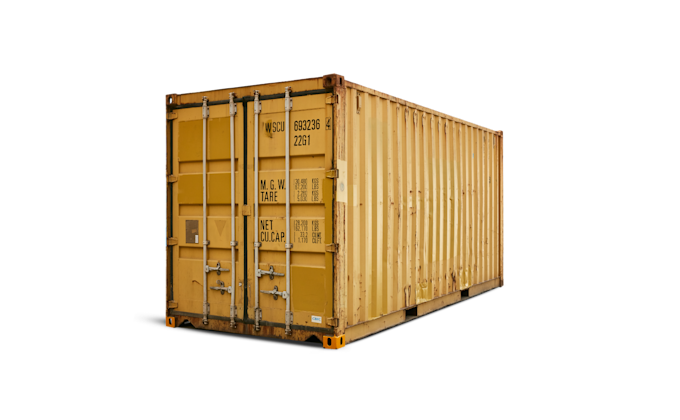
A shipping container is built to withstand rain, waves and salty weather on the open sea for years on end. Even so, many owners eventually run into moisture inside. The cause is almost never a leak, but condensation. In this FAQ we explain how waterproof a container really is and how you can easily prevent condensation.
Yes, a shipping container is waterproof. The walls, the roof and the floor beams are made of Corten steel, and the double doors close with rubber seals that keep rain and splashing water out. A container was originally designed to stand on the deck of a sea-going vessel, so it copes well with persistent rain and salty air.
At HEROX, every container is inspected before delivery. Used containers in cargo-worthy or A-grade condition are guaranteed wind and watertight and CSC-certified. New (one-trip) containers have made exactly one sea voyage and are practically as good as new. Waterproofing is therefore not a concern when buying — provided you maintain the coating and seals properly so that no rust holes or cracks develop in the rubbers.
Almost all the moisture people find in a closed container comes not from outside but from inside. This is called condensation, and in the container world also "container rain". During the day the steel warms up and the air inside holds a lot of moisture. When the temperature drops at night, the steel cools quickly and that moisture settles as droplets on the walls and ceiling — exactly like condensation on a cold window.
The greater the temperature difference between day and night, the more condensation. Wet or damp items you store (fresh timber products, cardboard, moist soil) also release moisture into the inside air and amplify the effect. Untreated steel barely insulates, so without measures this keeps coming back.
Note: if you see water on the floor or wet patches on stored goods, don't immediately assume a leak. First check whether there is ventilation and whether damp material is stored inside. Unnoticed condensation causes rust from the inside out over time, as well as mould on your belongings.
Preventing condensation comes down to one principle: make sure moist air can escape and that as little moisture as possible gets in. You tackle the steps below in order, from simple to more extensive. For most dry storage, the first few steps are already enough.
Our local team is happy to think along with you, with no obligation, about ventilation, insulation and the right condition for your storage. Leave your name and number and we'll get in touch within one hour on working days.
Which solution suits you best depends on what you use the container for. For simple, unheated storage, ventilation grilles are usually enough. As soon as you heat the space, temperature differences are large or you store moisture-sensitive items, insulation pays off. Insulation and ventilation are not mutually exclusive — often the combination is the most effective. The table below helps you choose.
| Use | Main measure | Addition |
|---|---|---|
| Cold, dry storage (tools, furniture) | Ventilation grilles | Load dry, place the container level |
| Moisture-sensitive goods (electronics, textiles) | Ventilation + desiccant | Light insulation if needed |
| Workshop or office (heated) | Insulation of walls and roof | Ventilation against moisture build-up |
| Agricultural storage (animal feed, machinery) | Ventilation grilles against overheating | Insulation for temperature-sensitive contents |
Absolutely. A container that stands at an angle or directly on damp ground draws moisture into the base and dries poorly. So place it on a flat, paved and load-bearing surface such as concrete ground slabs, with the container nicely level. That way rainwater can drain away underneath the container and no moisture is left standing against the floor beams. This is at the same time a requirement for delivery by crane truck or sideloader.
For most storage, a used container in cargo-worthy or A-grade condition is the best value-for-money choice: guaranteed wind and watertight, CSC-certified and inspected at our depot. If you want to convert the space later into a workshop or office, we carry out ventilation, insulation and extra doors before delivery in our own workshop. That way you get a ready-to-use, dry space on site. Below you'll see the current availability and starting prices near you.
Browse the range in the shop or request a quote with your preferred type and delivery location. On working days you'll receive a concrete price quotation within one hour, including any ventilation or insulation options.
Yes. The steel walls and roof, combined with rubber door seals, keep rain and splashing water out. Every used container at HEROX is guaranteed wind and watertight and CSC-certified. Waterproofing is maintained as long as you keep the coating and the door rubbers in good condition and touch up any damage in good time.
That's almost always condensation, not a leak. During the day the warm inside air holds moisture; when the steel cools at night, that moisture settles as droplets on the walls and ceiling. Large temperature differences and damp stored items amplify this effect. Ventilation and loading dry will solve it.
First of all, fit ventilation grilles so moist air can escape. Store only dry goods and, for sensitive contents, use desiccants such as container drying bags. For heated use or large temperature swings, insulating the walls and roof helps most. A flat, paved surface also prevents moisture from below.
Yes. Insulation keeps the steel warmer on the inside, so warm inside air is less likely to condense on a cold surface. This is especially important for a heated workshop or office. HEROX fits insulation, ventilation and lighting in its own workshop before the container is delivered.
In the long run, yes. Persistent moisture causes rust from the inside out and mould on stored goods such as cardboard, textiles or wood. That's why it's important to tackle condensation early with ventilation and, where needed, insulation or desiccants. A regular check a few times a year prevents most damage.
View live stock with prices, or get a tailored quote within one business hour.