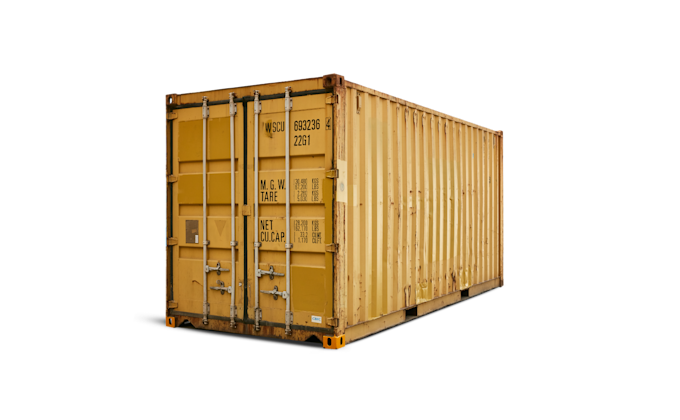
Is your online shop or logistics business growing faster than your warehouse can keep up with? A warehouse container gives you extra, lockable storage space on your own site within days, without the cost and build time of a warehouse extension. That way you keep stock, dispatch peaks and seasonal pressure under control without tying up a large part of your storage budget straight away.
An online shop growing faster than expected, or a logistics business anticipating a peak season, quickly runs up against the limits of its existing warehouse. Building a new unit soon costs months of permits, foundation work and construction time — time a growing business often does not have. A warehouse container is then a practical alternative: a steel, lockable storage space that is on your own site within days and ready to use immediately for extra inventory storage.
For e-commerce storage container applications, it is often about seasonal stock, returns or extra product ranges that no longer fit in the existing warehouse. Logistics businesses use a container as a buffer for a new contract or a temporary spike in throughput, without immediately taking on a long-term lease for extra premises. See also shipping container available immediately for anyone who needs to move quickly.
When weighing up whether to buy a logistics container or extend your warehouse, it is not only building costs that come into play. A warehouse extension often also requires a heavier mains connection for lighting, charging points or automation — and that is precisely where planning regularly runs into delays. Industry reporting in July 2026 noted that grid congestion is becoming an ever greater obstacle to expansion plans for logistics businesses, while those who handle it cleverly can even find a revenue model in it. Using a shipping container as a warehouse largely sidesteps that bottleneck: power demand stays limited to lighting and perhaps a heating element, with no heavy mains connection. A detailed comparison can be found in shipping container vs steel warehouse.
The outlay for a warehouse container depends on the size, the condition and any modifications such as extra personnel doors or lighting for shelving. A used container in cargo-worthy A-grade condition usually offers the best value for money for storage purposes, while a new one-trip container is virtually as-new. More background on how the price is built up can be found in what does a shipping container cost and shipping container prices in 2026.
Tell us how much extra storage space you need and for how long, and on working days you will receive a tailored proposal within an hour — including delivery by crane truck or sideloader.
Arranging extra storage space for a growing warehouse need not be a lengthy process. Here is how to go about it:
For most online shops and smaller logistics businesses, a 20ft container (around 6 metres) is a practical first step; anyone needing more volume can scale up to 40ft (around 12 metres) or place several units side by side. In our own workshop, warehouse containers can be fitted with extra personnel doors for faster flow, ventilation grilles against condensation, lighting and power for scanning equipment, and a lock box against break-ins. Anyone who would rather browse the options in inventory storage container form will find immediately available units below. For businesses needing several containers at once, buying containers in bulk for business is often more cost-effective, and when planning also bear in mind the transport costs to your location.
Do not place shelving directly against the walls but leave a few centimetres free for ventilation, so condensation does not build up against stored stock. More on this in shipping container maintenance.
Browse the current range in the shop or request a quote for a warehouse container tailored to your stock. If you are unsure about inspection or payment terms, also read what to look out for.
A warehouse container is a shipping container used as extra, lockable storage space for stock, packaging materials or returns. The container sits on your own site next to the existing warehouse and can be delivered within days, without the build time and permits of a warehouse extension. Both new and used containers are suitable, optionally adapted with extra doors, lighting or ventilation.
Yes, a used container in cargo-worthy A-grade condition is guaranteed wind and watertight and therefore suitable for the dry storage of stock, packaging materials or returns. For sensitive products, extra ventilation or insulation is advisable to prevent condensation. With shelving the space can be laid out efficiently, comparable to a small warehouse.
For structural growth in stock, buying is usually more cost-effective, as the container remains an investment that holds its value. For a temporary peak, such as a season or a one-off project, hiring is more flexible and requires no upfront purchase budget. The monthly hire price depends on type, condition and term.
A 20ft container is around 6 metres long and suitable as compact extra storage space, while a 40ft container of around 12 metres offers roughly double the volume. For larger warehouse needs, several containers can also be placed side by side. High Cube versions offer 30 centimetres of extra internal height for maximum loading volume.
That varies by local authority and depends on factors such as duration of placement, position on the site and the distance to the boundary. For temporary placement no permit is often needed, while permanent placement may be subject to requirements. Always check this with your local authority in advance to avoid delays.
View live stock with prices, or get a tailored quote within one business hour.