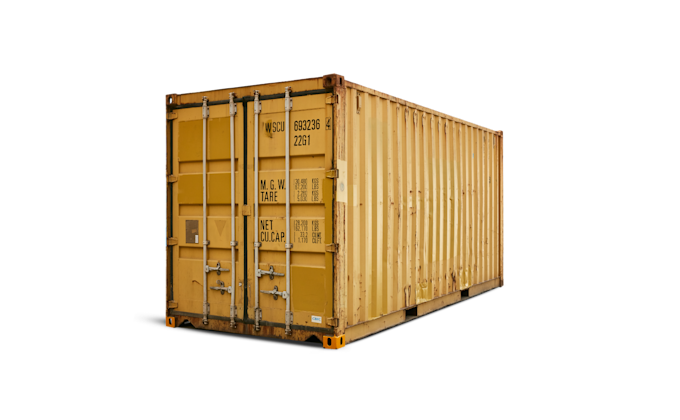
A swimming pool from a shipping container combines a robust steel tank with quick installation: no weeks of digging and bricklaying, but a ready-made shell that is set down on site. In this guide you will read which size works, how to make the container watertight, what is needed for siting and connection, and how the costs compare with a traditional pool.
A shipping container is already a strong, enclosed steel tank built to withstand years of wind and weather. That makes it an attractive base for an above-ground pool: the shell is in place within days, whereas a traditional pool calls for weeks of digging, concrete and tiling work. You can place the container above ground, partly sunk into the ground, or on a terrace, depending on your garden and budget.
The idea ties in with other bespoke uses a container lends itself to, from a shipping container as a workshop to a hobby space such as a home gym or sauna. Important to know: HEROX supplies the guaranteed wind and watertight container and carries out steelwork and spray painting in its own workshop. The watertight lining and the pool technology are specialist work that you often complete together with a specialist.
The size determines whether you get a plunge pool or a proper swimming lane. A 20ft container (roughly 6 metres) gives a compact pool that fits on an average plot or terrace. A 40ft container (roughly 12 metres) offers the length to swim lengths, but requires considerably more space, water and a heavier installation. The standard width of 2.44 metres stays the same at every size; the internal dimension is slightly smaller because of the wall thickness. If you are hesitating between two sizes, choose deliberately based on your garden and use, not on price alone.
Buitenmaten (l × b); High Cube-varianten zijn 30 cm hoger. View stock →
A container is guaranteed wind and watertight against rain from the outside, but that is something different from holding water permanently on the inside. For a pool the interior is therefore given a watertight lining: think of a liner, a welded-in steel or plastic inner tank, or a professional coating that stands up to chlorine or salt water. The choice depends on your budget, the intended lifespan and the type of water.
HEROX can spray the outside in any RAL colour in its own workshop, so the pool matches your garden or house style — see spray painting a container. If you want to keep the water at temperature, insulating the walls is a sensible addition to limit heat loss.
Do not underestimate the water pressure and the weight. A filled container weighs many tonnes, and water keeps the walls under constant stress. Always have the inner tank and the structural reinforcement carried out by a specialist: a poorly applied coating or an insufficiently reinforced wall leads over time to leakage or corrosion from the inside.
Because a filled pool is enormously heavy, the ground is decisive. You need a level, paved and load-bearing base, comparable to what applies when placing a container in the garden: concrete slabs or a concrete floor on a compacted bed. HEROX delivers the container throughout the country by crane lorry or sideloader, usually within 3 to 7 working days, and sets it down exactly where you want it, provided the site is accessible for a lorry.
Besides siting, a technical installation is part of the job: a pump and filter system, pipework, an earthed power connection and, optionally, a heat pump or heater. HEROX prepares these connections in the workshop where possible; the final pool technology is fitted on site.
An exact price cannot be given in advance: it depends on the size, the chosen lining, the installation and the level of finish. The cost structure is, however, different from a traditional pool. With a container pool you pay for the container plus modifications and finishing, whereas a sunken pool mainly involves digging, concrete and tiling work and a longer build. For a concrete figure, HEROX sends a quote for the container base within an hour on working days; have the pool fit-out costed separately by the installer.
| Aspect | Shipping container pool | Traditional sunken pool |
|---|---|---|
| Basic structure | Ready-made steel shell | Dug and poured on site |
| Lead time | Container on site within days | Weeks of digging and building |
| Siting | Above ground, partly or fully sunk | Almost always sunk in |
| Movable | Relatively easy to relocate | Fixed and not movable |
| Critical work | Watertight lining and reinforcement | Formwork, sealing and tiling |
| Maintenance | Check coating and steel | Check grouting, tiles and liner |
Let us know which size you are looking for and where the pool should go, and you will receive a quote for the container and the desired modifications within an hour on working days. The pool fit-out is costed separately with your installer.
For a pool, what counts most is a clean, undamaged wall that can properly support a watertight lining. A new (one-trip) container is virtually as-new and looks sleek, which is pleasant for a visible pool in the garden. A used container in cargo-worthy or A-grade quality is cheaper and guaranteed wind and watertight, provided the walls and floor are in good condition. If in doubt, weigh up the condition in consultation with the party fitting the inner tank. If, besides the pool, you also want a plant room or an access door, look into the options to modify a container with extra doors.
Think about safety and permits in advance. A swimming pool may fall under local rules or safety requirements, and these vary by local authority and situation. Always check this beforehand, just as when applying for a permit for a container on your property.
We note your name and telephone number or email address, the desired container type and the delivery location. On working days you will receive a concrete quote for the container base of your pool within an hour.
That depends on your space and use. A 20ft container of around 6 metres gives a compact plunge pool that fits on an average plot or terrace. A 40ft container of around 12 metres offers the length to swim lengths, but requires more space, water and a heavier installation. The width is around 2.44 metres for both sizes.
A container is watertight against rain from the outside, but a pool needs a watertight inner lining. Think of a liner, a welded-in inner tank or a professional coating that stands up to chlorine or salt water. This is specialist work: always have the lining and the necessary reinforcement carried out by a specialist to prevent leakage and corrosion.
A fixed figure cannot be given in advance, because size, lining, installation and finish vary greatly. HEROX costs the container base and modifications such as spray painting within an hour on working days via a quote. The watertight inner tank, pump, filter and any heating are costed separately by the installer, so you get a complete picture of the total costs.
A filled pool weighs many tonnes, so the ground must be level, paved and load-bearing. Concrete slabs or a concrete floor on a compacted bed are common solutions. The site must also be accessible for a lorry, so the container can be set down in exactly the right spot by crane lorry or sideloader.
Both work. A new (one-trip) container is virtually as-new and looks sleek, pleasant for a visible pool. A used container in cargo-worthy or A-grade quality is cheaper and guaranteed wind and watertight, provided the walls and floor are sound. For a pool, what counts most is an undamaged wall that can properly support the watertight lining.
View live stock with prices, or get a tailored quote within one business hour.