Anyone who needs extra storage or workspace faces a choice: put down a shipping container or build a steel shed or barn. Both solutions have their place, but the costs and ease of use vary considerably. We put shipping container vs steel shed side by side on purchase cost, build time, maintenance and annual running costs.
A shipping container is a ready-made, movable steel space that leaves the depot already wind and watertight. A steel shed or barn is built on site: first a foundation, then a steel structure, wall cladding and a roof. That difference in approach immediately explains most of the cost gap. With a container you pay for a finished product that you have delivered and placed. With a shed you pay for groundwork, materials, labour and often an architect or structural engineer for the planning application.
In terms of size, a shipping container is available as standard in 10ft (around 3 metres), 20ft (around 6 metres), 40ft (around 12 metres) and 45ft (around 13.7 metres). For extra standing height there is the High Cube variant, 30 centimetres taller than standard with an internal height of 2.70 metres. If you are unsure about the size, which shipping container size to choose will help with the decision. A steel shed is in principle unlimited in length and width, which only becomes a real advantage once you go beyond a few hundred square metres.
To really compare shipping container vs steel shed, it helps to look at costs per year rather than just the purchase price. With a container, the factors are: the purchase or rental price, any modifications, and beyond that little maintenance because steel is durable by nature. With a shed, the factors are: purchase including foundations and construction, annual maintenance to the roof and cladding, possible repairs, and sometimes a higher insurance premium due to the permanent nature of the structure. The table below sets out the main items side by side.
| Aspect | Shipping container | Steel shed |
|---|---|---|
| Purchase / build costs | One-off, no foundation needed | Foundation, steel structure, cladding and roof |
| Build and delivery time | Usually 3 to 7 working days | Weeks to months |
| Permit | Depends on the local authority, often simpler | Almost always a permit process |
| Maintenance | Limited, steel is durable | Annual maintenance to roof and cladding |
| Flexibility | Movable and expandable | Fixed, not movable |
| Insulation | Optional to add | Often a substantial extra cost item |
A shipping container is cheaper than building a shed as soon as you are looking at temporary or medium-term storage needs, quick availability and a limited surface area. Think of material storage on a building site, extra workspace behind a business premises or private storage in the garden. In those cases the fixed costs of a shed (foundation, permit, build time) weigh heavily, whereas a container can in principle be in place within 3 to 7 working days, exactly where you want it, provided the ground is reasonably level and paved and the location is accessible for a lorry with a crane or sideloader.
A steel shed becomes more attractive once you structurally need a lot of square metres, for example for a farm with machinery or an industrial unit with office space. Then you spread the fixed costs over a larger surface area and the price per square metre becomes more competitive. For smaller and medium-sized needs, a container, or a combination of several containers, often remains the cheaper and faster route.
Request a quote with your preferred type of container and delivery location. On working days you usually receive a response within an hour with price, stock and delivery date.
Building a steel shed takes time: from design and permit application to foundation work and the actual construction, weeks to months can pass, depending on the local authority and the scale. A shipping container is usually there within 3 to 7 working days of ordering. Note: rules may also apply to placing a container, depending on the local authority and zoning plan. These rules vary by local authority and country, so always check this locally. You can read more about this in whether you need a permit for a shipping container on your land and in buying a shipping container by region.
In terms of ease of use, a container also scores well: it is movable if the situation changes, expandable by simply placing a second container alongside, and adaptable in our own workshop. Think of extra access doors, windows, ventilation grilles, electrics and lighting, a lock box against break-ins, insulation and spraying in any RAL colour. These modifications are carried out before delivery, so the container arrives ready for use. Anyone wanting to convert a container into a fully-fledged workspace can read more about a shipping container as an office, workshop or garage.
An untreated steel container provides almost no insulation by itself: steel transfers heat and cold quickly. However, the insulation value improves considerably as soon as you opt for an insulated version, something that is applied in our own workshop. With insulation and optionally electrics and lighting, a container becomes suitable as a fully-fledged workspace, even in winter. A steel shed has the same problem: without insulation, a shed is also hard to use as a comfortable workspace, and insulation is often a substantial extra cost item for a shed due to the larger surface area. How to have a container insulated and connected to power is covered separately.
For pure storage without a living function, insulation is usually not needed; a guaranteed wind and watertight used container (cargo-worthy or A-grade, CSC-certified) is then already sufficient. New means one-trip: exactly one sea voyage made and virtually as-new, which gives a slightly different price point and appearance.
If you are torn between two sizes, it is better to choose the larger one: extra space costs relatively little, whereas a container that is too small quickly becomes cramped. And if you do not yet know whether the need is permanent, renting is a handy interim step before you commit to buying.
Anyone who would rather not buy straight away can also consider renting. The monthly price depends on type, condition and term, and is a handy interim solution if you are not yet sure whether the need is permanent; you will find more details at renting a shipping container by the month. If you are torn between buying and renting, buying or renting a shipping container will help with the decision.
Whether you buy or rent, HEROX offers three payment options: pay in advance by bank transfer with a 5 percent discount, pay after delivery (see it first, then pay), or pay in instalments up to 36 months via licensed European finance partners. That way you do not have to pay in full upfront to an unknown party. You can read more about this at buying a shipping container safely without a middleman. Below you can already see a current selection from stock.
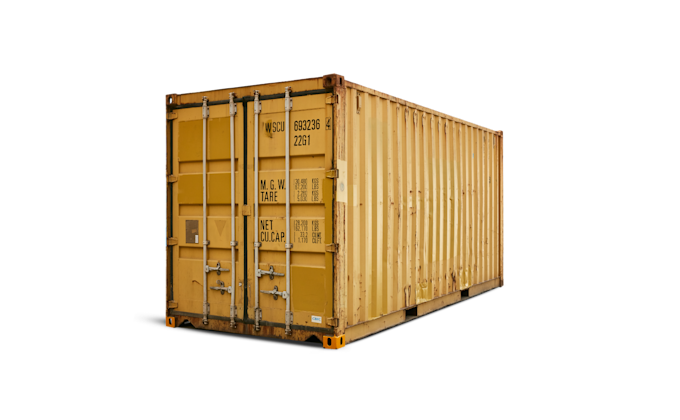
Reliable 20ft standard container, wind & watertight, ideal for storage or transport.
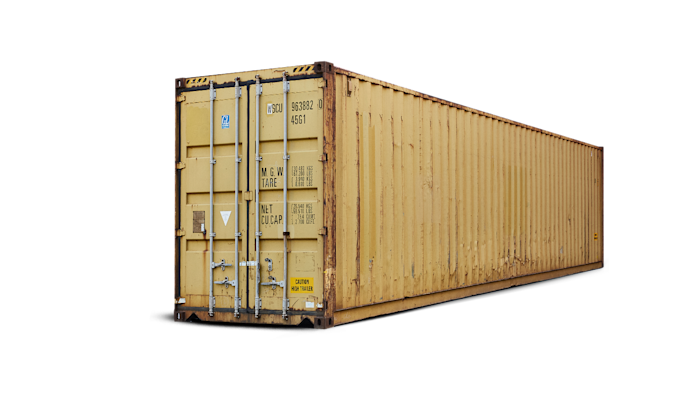
Extra height 40ft HC container — 2.70m internal height for maximum volume.
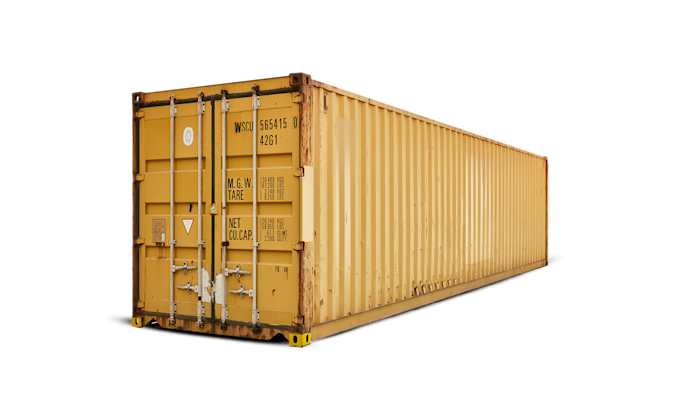
Spacious 40ft standard container with double doors, perfect for larger storage needs.
Browse the current stock in the shop or request a quote straight away with your preferred type of container and delivery location. On working days we usually respond within an hour.
For smaller and medium-sized needs up to a few dozen square metres, a shipping container is usually cheaper, because no foundation and lengthy build process are needed. For large, permanent surface areas of hundreds of square metres, a steel shed can ultimately become more competitive per square metre, because the fixed costs are then spread over more surface area.
A shipping container is usually delivered within 3 to 7 working days and placed on site with a crane lorry or sideloader, provided the ground is level and paved and accessible for a lorry. A steel shed often takes weeks to months due to the permit application, foundation work and the construction itself.
An untreated container insulates poorly by itself, but insulation can be added in our own workshop, together with electrics and lighting. That makes a container suitable as a fully-fledged workspace, even in winter. For pure storage without a living function, insulation is usually not needed.
That varies by local authority and country, so always check this locally before you order or build. In general the process for a container is simpler than for a steel shed, because no foundation and structural drawing are needed, but we cannot give guarantees about this.
Yes, renting is also possible. The monthly price depends on type, condition and term. That is a handy interim solution if the need for extra space is temporary, or if you first want to try out whether a container meets your expectations before committing to buying. On working days you receive a tailored rental proposal within an hour.
View live stock with prices, or get a tailored quote within one business hour.


