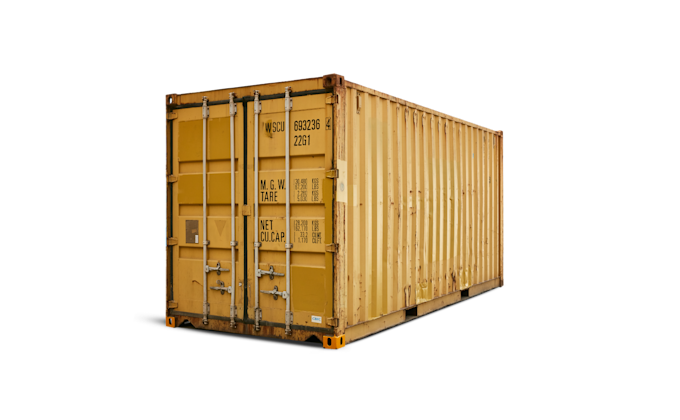
On every building site, tools and materials need to be kept dry, secure and within easy reach. Buying a site container or hiring one are the two most common solutions, but they differ in ways that matter directly to contractors in terms of cost and convenience. Below we set out the differences, including how they compare with the classic site cabin.
A site cabin is originally intended as accommodation: a place for staff to take breaks, hold meetings or get changed. Site cabins are often more lightly built, with more windows and sometimes features such as a kitchenette. A site container, in practice usually a steel shipping container, is built to withstand heavy transport and years of outdoor use. That makes it robust and burglar-resistant, exactly what you want for storage on an open site.
Many construction firms combine the two: a cabin for the team and a container for storage. If you would rather make a container suitable as an office or break room, that is possible too. Read more about the options in converting a shipping container into an office, workshop or garage. The table below sums up the essentials.
| Feature | Site container | Site cabin |
|---|---|---|
| Primary function | Dry, secure storage of materials and tools | Accommodation: breaks, meetings, changing |
| Construction | Heavy steel, resistant to wind and weather | Lighter, often with windows and a kitchenette |
| Security | Strong, even more burglar-resistant with a lock box | More limited due to windows and lighter walls |
| Movable | Yes, can move on to the next project | Yes, but less robust under intensive transport |
A storage container on the building site offers a few practical advantages that directly affect a project's progress. Tools and materials are a popular target on building sites; a steel container with sturdy locks is considerably harder to force than a tent or open storage. On top of that, a used container is guaranteed wind and watertight, keeping materials dry even during prolonged rain or frost.
Containers are delivered by crane lorry or sideloader and set down exactly where needed, provided the ground is reasonably level and firm and the location is accessible for a lorry. For contractors working on several sites at once, this is a way to standardise storage: every building site gets the same container with the same layout and security, which simply moves on to the next project.
The right size depends on what you are storing and how much room the building site offers. A 10ft container (about 3 metres) is compact and suited to small projects or limited space. A 20ft container (about 6 metres) is the standard materials container for most construction projects. For large projects with plenty of materials, machinery or several trades, a 40ft (about 12 metres) offers the most volume, and a High Cube adds 30 centimetres of internal height for racking or tall machinery.
For tool storage, a 20ft container is often the practical middle ground: big enough for storage units and power tools, yet still compact enough for most building sites. If you are torn between two sizes, take a look at which shipping container size to choose. Compare the sizes directly below.
Buitenmaten (l × b); High Cube-varianten zijn 30 cm hoger. View stock →
This is the key question for most contractors, and the answer depends on the duration and the number of projects. Hiring is attractive for a single project with a clear end date, or when you still want to try out which size and layout work best. Buying becomes cheaper as soon as the container is used over a longer period or across several projects: a purchased container remains a business asset that holds its value and still fetches a solid second-hand price once written down.
You can read more about the terms and durations of hire in hiring a shipping container: monthly price, duration and flexible options. The trade-off in broad terms:
Let us know your project size and duration, and the HEROX team will work out with you, free of charge and with no obligation, which option works out cheaper for your situation. On working days you will receive a concrete proposal within an hour.
For storing tools and materials, a used container offers the best value for money in most cases. Used containers are cargo-worthy or A-grade: guaranteed wind and watertight, CSC-certified and inspected at the depot before delivery. If you want a presentable appearance, for instance with a container that also serves as an office, a new one-trip container is an option: it has made exactly one sea voyage and is practically as good as new. The difference is mainly in price and looks, as we explain in buying a new or used shipping container.
In its own workshop, HEROX makes the container fit for construction work: extra personnel doors for quick access, ventilation grilles against moisture build-up, electrics and lighting for the early morning or winter, a lock box against break-ins, insulation for temperature-sensitive materials and a spray finish in your RAL house-style colour for recognisability. You will find more options in bespoke containers: lighting and extra features. All modifications are carried out before delivery. Below is a selection from current stock.
Delivery takes place throughout the country by crane lorry or sideloader, typically within 3 to 7 working days. The container is set down precisely at the desired location, provided the ground is reasonably level and firm and there is enough room to manoeuvre. On an active building site it is wise to agree the exact spot in advance, so the container does not get in the way of groundwork or other deliveries. Rules on siting and permits vary by local authority; general information by region can be found in buying or hiring a shipping container by region.
With larger purchases, trust matters. HEROX works without intermediaries: containers come straight from the source and are permanently in stock at European depots. Payment can be made in three ways: in advance by bank transfer with a 5 percent discount, after delivery, or spread over up to 36 months via licensed European finance partners. You can read more about this in buying a shipping container safely without an intermediary. Find the same container cheaper elsewhere in the same condition, and HEROX will match that price and add an extra discount on top.
Working with valuable power tools? Combine a lock box with interior lighting and ventilation in a single order. The container then arrives on the building site ready to use and secured, with no need to adapt anything on site.
Browse current stock in the shop or request a quote straight away. With your name, phone number or email address, the type of container you want and the delivery location, you will receive a concrete proposal on working days within an hour, including price, stock and delivery date.
For long-term use or deployment across several projects, buying is usually cheaper, because the container remains an investment that holds its value. For a one-off project with a short duration, hiring is often more flexible and requires no purchase budget up front. Get in touch via the contact form to determine the best choice for your situation.
A site cabin is fitted out as accommodation for staff, with windows and sometimes a kitchenette. A site container is a steel shipping container, built for heavy loads and years of outdoor use, and intended primarily for the dry, secure storage of materials and tools on the building site.
For most construction projects, a 20ft container, about 6 metres long, is the practical middle ground: big enough for storage units and power tools, compact enough to fit on most building sites. For large projects with plenty of materials, a 40ft or 40ft High Cube container is more suitable.
Yes, in its own workshop containers are adapted with, for example, extra personnel doors, ventilation grilles, electrics and lighting, a lock box against break-ins and insulation. These modifications are carried out before delivery, so the container is ready to use as soon as it arrives on the building site.
Delivery takes place throughout the country by crane lorry or sideloader, typically within 3 to 7 working days. The container is set down precisely at the desired location, provided the ground is reasonably level and firm and the location is accessible for a lorry.
View live stock with prices, or get a tailored quote within one business hour.